
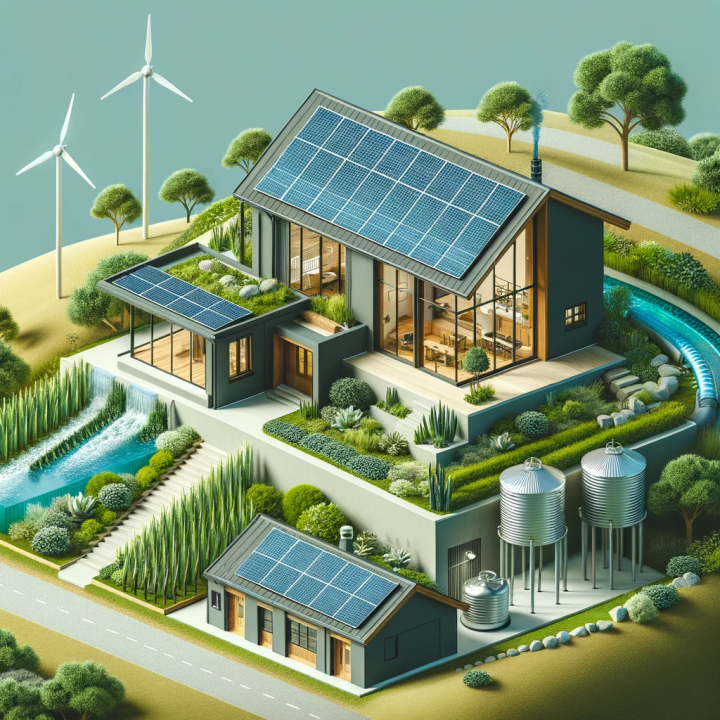
Eco-friendly homes are becoming increasingly popular as people seek to reduce their environmental impact and improve their quality of life. These homes are designed to minimize energy consumption, promote healthy indoor environments, and utilize sustainable materials. Living in an eco-friendly home can offer numerous benefits, including:
- Environmental protection: Eco-friendly homes reduce their environmental impact by conserving energy, using recycled materials, and employing sustainable building practices. This contributes to addressing pressing environmental issues like climate change, air pollution, and water contamination.
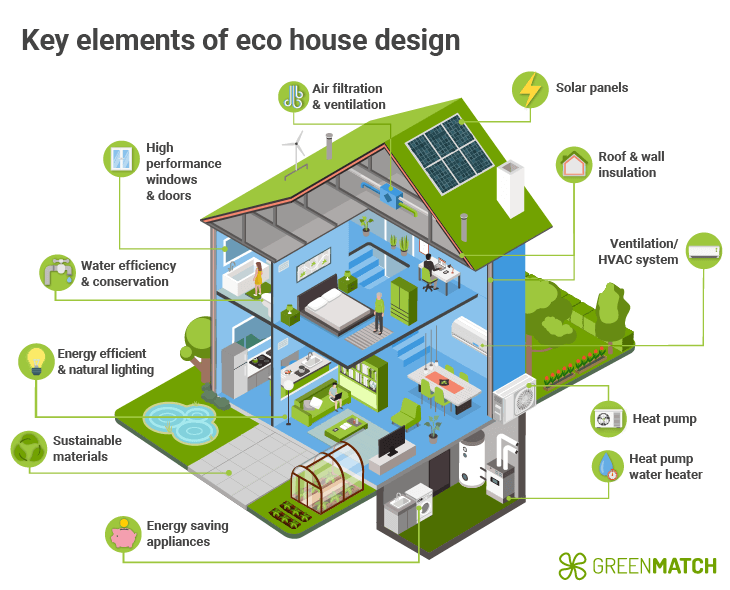
- Energy savings: Eco-friendly homes are designed with superior insulation, which significantly reduces heating and cooling energy consumption. Additionally, they may incorporate renewable energy systems like solar panels and geothermal systems to enhance energy independence. This not only lowers energy costs but also reduces reliance on fossil fuels, further benefiting the environment.
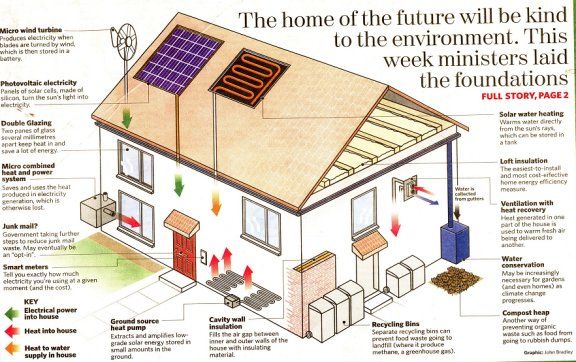
- Health benefits: Eco-friendly homes prioritize creating healthy indoor environments. They utilize low-VOC (volatile organic compound) emitting natural materials and implement indoor ventilation systems to minimize harmful substances and allergens. This helps reduce the risk of respiratory illnesses, skin conditions, and overall health problems.
- Financial advantages: Eco-friendly homes can save money on energy bills due to their energy efficiency. Additionally, they may be eligible for government tax breaks or incentives related to eco-friendly housing, providing financial benefits.
- Improved quality of life: Eco-friendly homes offer comfortable and healthy indoor environments and promote harmonious connections with nature, enhancing overall居住满意度. Moreover, they contribute to energy conservation and an eco-friendly lifestyle, further improving quality of life.
While the initial cost of building an eco-friendly home may be higher, the long-term advantages, including energy savings, health benefits, environmental protection, and potential financial gains, make it a wise investment for both individuals and the planet.

Investing in Eco-Friendly Companies
Another way to contribute to the eco-friendly movement and potentially benefit financially is by investing in companies that specialize in sustainable practices and eco-friendly products. Here are some examples of companies that are leading the way in the eco-friendly housing sector:
1. Hanwha E&C (South Korea)
Hanwha E&C is a leading South Korean company that promotes sustainable development through its ‘Green Infra Developer’ initiative. They specialize in large-scale mixed-use developments and eco-friendly energy projects.
Key features of Hanwha E&C’s eco-friendly homes:
- High-performance insulation: Minimizes energy loss through advanced insulation techniques.
- Eco-friendly materials: Utilizes recycled and low-VOC materials to create healthy indoor environments.
- Natural energy utilization: Leverages solar and geothermal energy systems to enhance energy efficiency.
2. Lotte Construction (South Korea)
Lotte Construction is committed to sustainable growth through its active pursuit of ‘ESG management.’
Key features of Lotte Construction’s eco-friendly homes:
- LEED certification: Constructs eco-friendly homes that meet Leadership in Energy and Environmental Design (LEED) standards.
- Zero-energy homes: Develops energy-zero homes that achieve net-zero energy consumption.
- Eco-friendly communities: Creates eco-friendly neighborhoods that consider the surrounding environment.
3. Hyundai Engineering & Construction (South Korea)
Hyundai Engineering & Construction has been recognized as the ‘World Leader’ in the construction industry for 11 consecutive years by the S&P Dow Jones Sustainability Indices (DJSI).
Key features of Hyundai Engineering & Construction’s eco-friendly homes:
- Passive House standards: Constructs ultra-low-energy homes that adhere to Passive House standards.
- Future-energy homes: Develops homes that utilize future energy sources like solar, geothermal, and hydrogen fuel cells.
- Wellness homes: Builds wellness homes that promote healthy and comfortable indoor environments.
These are just a few examples of companies that are making significant contributions to the eco-friendly housing sector. When considering investing in eco-friendly homes or companies, it is crucial to research and compare the technologies, philosophies, and track records of various options to make informed decisions.
Embracing Eco-Friendly Living
By choosing eco-friendly homes and supporting companies that prioritize sustainability, we can collectively make a positive impact on the environment and contribute to a greener future. As the demand for eco-friendly living continues to grow, these choices will not only benefit the planet but also potentially provide financial rewards in the long run.
 Moraum
댓글 남기기