
Introduction
In today’s dynamic business landscape, effective leadership is crucial for the success of any organization. CEOs play a pivotal role in shaping their companies’ strategies, cultures, and overall direction. Their management philosophies serve as guiding principles that influence decision-making, employee engagement, and long-term growth prospects.
This article delves into the management philosophies of five renowned CEOs: Elon Musk, Jeff Bezos, Bernard Arnault, Bill Gates, and Warren Buffett. By understanding their unique approaches, we can gain valuable insights into the factors that contribute to exceptional leadership and organizational excellence.
1. Elon Musk: Embracing Innovation and Risk-Taking
Elon Musk, the visionary CEO of Tesla and SpaceX, is renowned for his unwavering passion for innovation and his willingness to embrace bold challenges. His management philosophy is characterized by the following key elements:
- Unwavering Belief in Innovation: Musk firmly believes that innovation is the lifeblood of success. He constantly pushes the boundaries of technology, venturing into uncharted territories like electric vehicles, space exploration, and sustainable energy.
- Embrace of Calculated Risks: Musk isn’t afraid to take calculated risks, recognizing that groundbreaking achievements often require stepping outside comfort zones. He encourages experimentation and welcomes failures as learning opportunities.
- Setting Ambitious Goals: Musk sets ambitious goals that inspire and motivate his teams. He envisions a future where humanity thrives on sustainable technologies and boldly pursues transformative endeavors.
2. Jeff Bezos: Customer Centricity, Long-Term Thinking, and Relentless Growth
Jeff Bezos, the founder and former CEO of Amazon, has revolutionized e-commerce and established a global business empire. His management philosophy is centered on the following core principles:
- Customer-Centric Approach: Bezos prioritizes customer satisfaction above all else. He believes that understanding and exceeding customer expectations is paramount to long-term success.
- Long-Term Vision: Bezos emphasizes long-term thinking over short-term gains. He focuses on building sustainable growth strategies that align with the company’s mission and values.
- Relentless Pursuit of Innovation: Bezos fosters a culture of innovation, encouraging continuous improvement and experimentation. He believes that staying ahead of the curve is essential for maintaining a competitive edge.
3. Bernard Arnault: Preserving Brand Value, Strategic Expansion, and Artistic Investment
Bernard Arnault, the CEO of LVMH Moët Hennessy – Louis Vuitton, has transformed the luxury goods industry through his astute leadership and strategic acquisitions. His management philosophy is driven by the following key factors:
- Preserving Brand Heritage: Arnault recognizes the intrinsic value of LVMH’s iconic brands. He carefully balances preserving their rich heritage with modernizing their appeal to maintain their exclusivity and desirability.
- Strategic Expansion: Arnault pursues strategic expansion opportunities, carefully selecting brands that align with LVMH’s portfolio and enhance its global presence.
- Investment in Arts and Culture: Arnault believes that arts and culture play a crucial role in reinforcing LVMH’s brand image and connecting with discerning consumers. He supports artistic endeavors and collaborates with renowned institutions.
4. Bill Gates: Innovation, Philanthropic Responsibility, and Data-Driven Decision-Making
Bill Gates, the co-founder of Microsoft, has revolutionized personal computing and emerged as a global icon for innovation and philanthropy. His management philosophy is characterized by the following elements:
- Unwavering Commitment to Innovation: Gates recognizes that innovation is the driving force behind technological advancements and market dominance. He encourages continuous innovation and embraces new ideas.
- Philanthropic Responsibility: Gates believes that businesses have a responsibility to give back to society. He established the Bill & Melinda Gates Foundation, dedicating significant resources to addressing global challenges like poverty and disease.
- Data-Driven Decision-Making: Gates emphasizes the importance of data-driven decision-making. He utilizes data analytics to gain insights into market trends, customer behavior, and operational efficiency.
5. Warren Buffett: Value Investing, Long-Term Perspective, and Understanding Business Fundamentals
Warren Buffett, the renowned investor and CEO of Berkshire Hathaway, is revered for his value investing approach and long-term investment horizons. His management philosophy is anchored by the following principles:
- Value Investing Strategy: Buffett advocates for value investing, seeking undervalued stocks with strong long-term growth potential. He emphasizes rational analysis and emotional detachment in investment decisions.
- Long-Term Investment Perspective: Buffett focuses on long-term investment horizons, avoiding short-term market fluctuations and prioritizing sustainable growth. He invests in businesses with enduring competitive advantages.
- Understanding Business Fundamentals: Buffett believes in thorough understanding of a business’s fundamentals before investing. He assesses its competitive landscape, financial strength, and long-term growth prospects.
Conclusion
The management philosophies of these five CEOs offer valuable insights into the diverse approaches that have led to their remarkable success.
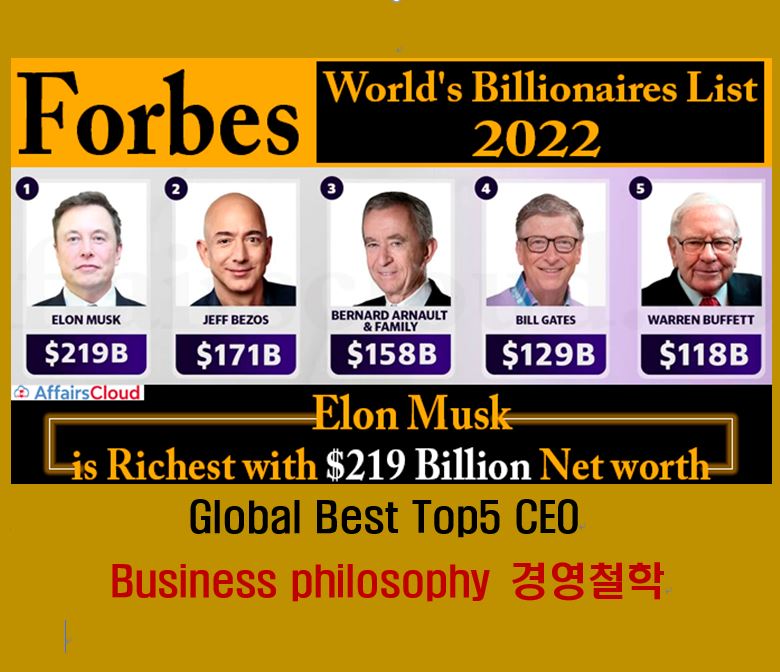
시가총액이 높다는 것은 전 세계에서 인정을 받고 있다는 뜻으로 여겨 집니다.
그만큼 자금이 모였고, 많은 이들이 더더욱 성장을 기대하기 때문입니다.
이렇게 많은 이들이 투자처로 모인 주식들은
안정적 우상향으로 상승하는 주식들이 대부분이며,
CEO의 경영철학이 회사를 좌지우지 할 수 있습니다.
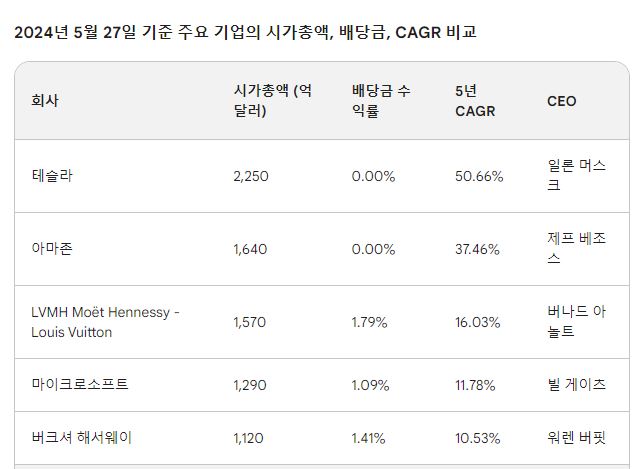
각 회사들의 순위는 옥신각신 하고 있지만
향후 5개년간은 항시 top10을 유지하고 있을 것으로 판단됩니다.
각 CEO들의 경영철학을 살펴 보겠습니다.
1. 일론 머스크 (Elon Musk CEO of #Tesla, #SpaceX )

- 혁신에 대한 열정: 머스크는 혁신과 기술 발전에 대한 열정으로 유명합니다. 그는 전기 자동차, 우주 여행, 태양 에너지와 같은 혁신적인 분야에서 여러 회사를 설립했습니다.
- 위험 감수 의지: 머스크는 위험 감수 의지가 강한 리더입니다. 그는 다른 사람들이 미친 꿈으로 여기는 도전적인 프로젝트를 추진하는 것을 두려워하지 않습니다.
- 큰 목표 설정: 머스크는 크고 야심찬 목표를 설정하는 것을 두려워하지 않습니다. 그는 인류가 지속 가능한 미래를 만들 수 있도록 돕는 것을 목표로 합니다.
2. 제프 베조스(Jeff Bezos CEO of #Amazon )
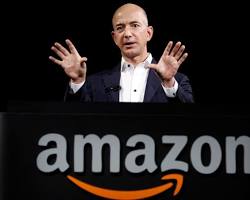
제프 베조스의 경영철학은 고객 중심, 장기적 사고, 혁신, 데이터 기반 의사 결정, 우수한 인재 확보 및 유지, 끊임없는 성장 등의 요소를 기반으로 합니다. 그의 비전과 리더십 덕분에 아마존은 세계 최고의 기업으로 성장했으며, 그의 경영철학은 전 세계 많은 기업들에게 영감을 주고 있습니다.
3. 버나드 아놀트(CEO of #LVMH Moët Hennessy Louis Vuitton )

버나드 아놀트의 경영철학은 명품 브랜드의 가치 관리, 끊임없는 확장, 뛰어난 인재 확보, 장기적 관점, 예술과 문화에 대한 투자 등의 요소를 기반으로 합니다. 그의 비전과 리더십 덕분에 LVMH는 세계 최고의 명품 기업으로 성장했으며, 그의 경영철학은 많은 기업들에게 귀감이 되고 있습니다.
4. 빌 게이츠(Bill Gates CEO of Microsoft )

빌 게이츠는 제가 가장 존경하는 CEO중 한명인데요, 마이크로소프트의 공동 설립자 겸 전 CEO로서, 개인용 컴퓨터 시대를 열고 전 세계 수십억 명의 사람들의 삶을 변화시킨 인물로 평가받습니다.
게이츠는 혁신을 통해 경쟁 우위를 확보하고 지속적인 성장을 이루는 것이 중요하다고 믿습니다. 그는 새로운 기술과 아이디어를 적극적으로 도입하여 시장을 선도하는 제품과 서비스를 개발했습니다. 또한, 실패를 두려워하지 않고 끊임없이 새로운 도전을 시도하며, 변화하는 시장 환경에 빠르게 적응했습니다.
게이츠는 기업은 사회에 책임을 지고 윤리적으로 경영해야 한다고 믿습니다. 그는 빌 & 멜린다 게이츠 재단을 설립하여 질병 예방, 교육 개선, 빈곤 퇴치 등 다양한 사회 문제 해결에 기여하고 있습니다.
5. 워렌 버핏(Warren Buffett CEO of Berkshire Hathaway)
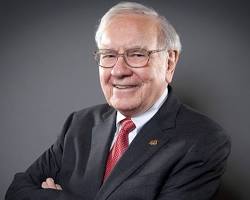
- 가치 투자: 버핏은 저평가된 주식을 장기간 보유하는 가치 투자 전략으로 유명합니다. 그는 감정에 사로잡히지 않고 합리적인 분석을 통해 투자 결정을 내리는 것을 강조합니다.
- 장기적인 관점: 버핏은 단기적인 이익보다는 장기적인 성장에 더 집중합니다. 그는 변덕스러운 시장 변동에 흔들리지 않고 꾸준히 사업을 성장시키는 데 초점을 맞춥니다.
- 사업의 본질 이해: 버핏은 투자하기 전에 사업의 본질을 명확하게 이해하는 것이 중요하다고 생각합니다. 그는 경쟁 우위를 확보하고 지속 가능한 성장 가능성이 있는 사업에만 투자합니다.
워렌과 빌은 제가 지난 글에서도 다루었는데요,
그야 말로 전 세계 기부왕 TOP2 로서 세계에 존경을 받고 있습니다.
https://blog.naver.com/yoonzays/223425601876

나누면 나눌 수록 X10배가 되어 돌아온다 라는 말이 있습니다.
똑똑하고 지혜롭고 현명할 수록 이타적인 마음으로
사람들을 돕는 천재들의 경영철학은 가히 존경하고 또 따를 수 밖에 없네요.
여러분들은 어떤 철학으로 오늘을 맞이하고 계실까요?
오늘 하루도 그 철학을 통해
세상에 빛이 되는 멋진 하루를 보내시기를 기원 드립니다.
감사합니다.

 Moraum
댓글 남기기