
Introduction
In the realm of personal brands, few names hold as much prestige and recognition as Louis Vuitton. With a brand value estimated at a staggering 372 billion euros (approximately 559 trillion won), LVMH Moët Hennessy, the company that owns the Louis Vuitton brand, consistently ranks among the top five most valuable companies in the world. This remarkable success story is a testament to the enduring legacy of Louis Vuitton, a brand that has epitomized luxury and innovation for over 160 years.
The Birth of a Legend
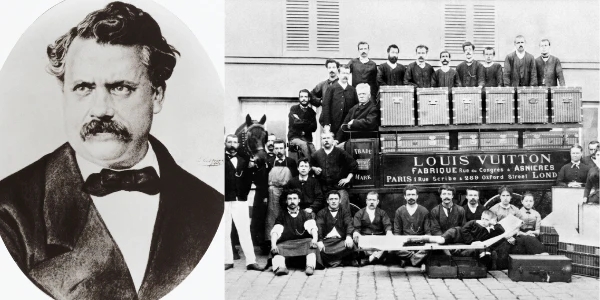
The story of Louis Vuitton begins in 1821, when a young man named Louis Vuitton was born in France. In 1854, driven by his entrepreneurial spirit and a passion for craftsmanship, Vuitton established his own leather goods workshop in Paris. His creations, particularly his sturdy and stylish trunks and travel bags, quickly gained popularity among discerning travelers worldwide.
Georges Vuitton: Carrying on the Legacy
Upon Louis Vuitton’s passing in 1888, his son Georges Vuitton took the reins of the company. With a deep respect for his father’s heritage, Georges embarked on a mission to elevate the Louis Vuitton brand to even greater heights. In 1893, he unveiled the iconic Louis Vuitton monogram logo, a design that would become synonymous with luxury and exclusivity. Georges’ vision and leadership propelled Louis Vuitton onto the global stage, cementing its reputation as a premier luxury brand.
LVMH Moët Hennessy: A Synergistic Partnership
In 1987, a pivotal moment in Louis Vuitton’s history unfolded when the company was acquired by LVMH Moët Hennessy, a group formed by French businessman Bernard Arnault. Arnault recognized the immense potential of Louis Vuitton, along with other renowned brands like Moët & Chandon and Hennessy, to create a formidable force in the luxury industry. This strategic merger marked a new era for Louis Vuitton, providing the resources and support to expand its global reach and diversify its product offerings.
Bernard Arnault: A Visionary Leader
Bernard Arnault, the visionary leader behind LVMH Moët Hennessy, is widely admired for his impeccable business acumen and his keen eye for fashion. His signature style, characterized by tailored suits and a polished appearance, reflects his status as one of the world’s most successful CEOs. Arnault’s leadership has been instrumental in shaping LVMH into a global powerhouse, and his dedication to preserving the legacy of Louis Vuitton is evident in the brand’s continued success.
LVMH’s Remarkable Growth
Since Louis Vuitton’s acquisition by LVMH, the company has experienced remarkable growth and expansion. Throughout the 1990s, LVMH focused on strengthening its existing luxury brands while acquiring new ones, such as Givenchy, Kenzo, and Fendi. The 2000s saw a further diversification into new sectors, including cosmetics, jewelry, and fashion accessories. In the 2010s, LVMH intensified its efforts to penetrate the Asian market, recognizing its immense growth potential. And in recent years, the company has placed a strong emphasis on sustainability and digital strategies to remain at the forefront of the luxury industry.
Financial Performance and Dividends
As of June 2, 2024, LVMH Moët Hennessy’s share price stands at 750 euros, with an annual dividend of 12.50 euros. This translates to a dividend yield of 1.67%. Notably, the company’s 2023 dividend payout was the highest in its history, and there are promising prospects for continued dividend growth. LVMH distributes dividends to shareholders twice a year, in January and May. This commitment to returning value to shareholders reflects Louis Vuitton’s enduring commitment to its stakeholders.
Conclusion
Louis Vuitton’s brand name stands as a testament to the visionary spirit of its founder, Louis Vuitton, and the exceptional leadership of those who have followed in his footsteps. The brand’s legacy is deeply intertwined with innovation, craftsmanship, and a dedication to providing customers with exceptional products and experiences. As LVMH Moët Hennessy continues to navigate the ever-evolving landscape of the luxury industry, Louis Vuitton remains at the forefront, poised to continue its reign as a symbol of timeless elegance and enduring quality.
Call to Action
The world of personal branding offers a wealth of insights and strategies for individuals and businesses alike. As you delve deeper into this fascinating realm, remember to engage with the community by sharing your thoughts, asking questions, and providing feedback. Together, we can explore the art and science of personal branding and elevate our collective understanding of this powerful tool for success and fulfillment.
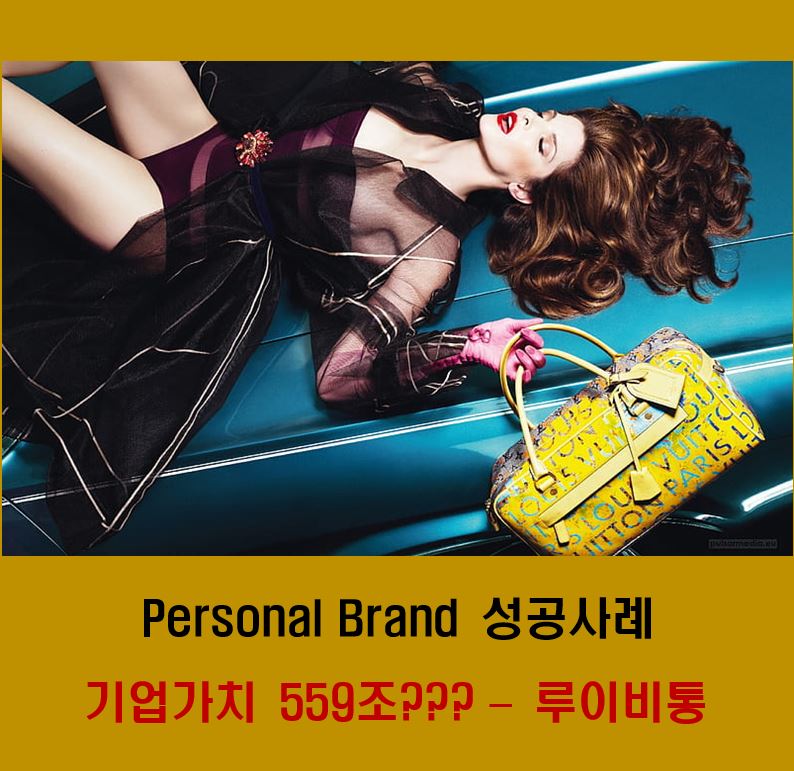
지난 글에는 샤넬을 살펴 보았었는데요,
현 지구상에서 퍼스널브랜드 로는 기업가치가 가장 높게 평가 받는 곳이 있습니다.
루이비통 의 브랜드를 소유하고 있는는
LVMH Moët Hennessy 입니다.
무려 기업가치가 3,720억 유로 (559조원)로,
세계에서 늘 Top5에 들어가는 초일류 회사로 성장하였습니다.
루이비통 브랜드 이름은 창립자 루이 비통의 이름에서 유래했습니다. 루이 비통은 1821년 프랑스에서 태어나 1854년 파리에서 자신의 가죽 제품 공방을 열었습니다. 그는 당시 유행했던 트렁크와 여행 가방을 제작하여 명성을 얻었으며, 그의 튼튼하고 세련된 디자인은 곧 전 세계 여행객들에게 인기를 얻게 되었습니다.
루이 비통이 사망한 후 그의 아들 조르주 비통이 회사를 인수했습니다. 조르주는 아버지의 유산을 이어가며 루이비통 브랜드를 더욱 발전시켰습니다. 그는 루이비통의 상징적인 모노그램 로고를 디자인하고, 새로운 제품 라인을 출시하며, 해외 시장을 확장했습니다. 조르주의 노력 덕분에 루이비통은 세계적으로 유명한 명품 브랜드로 자리매김했습니다.
오늘날 루이비통은 여전히 비통 가족의 소유이며, 패션, 가죽 제품, 향수, 시계, 주얼리 등 다양한 제품을 생산하고 판매하고 있습니다. 루이비통은 여전히 최고의 품질과 혁신적인 디자인으로 유명하며, 전 세계적으로 가장 인기 있는 명품 브랜드 중 하나입니다.
루이비통 브랜드 이름의 역사를 요약하면 다음과 같습니다.
- 1854년: 루이 비통이 프랑스 파리에서 가죽 제품 공방을 설립
- 1888년: 루이 비통 사망 후 아들 조르주 비통이 회사를 인수
- 1893년: 조르주 비통, 루이비통 상징적인 모노그램 로고 디자인
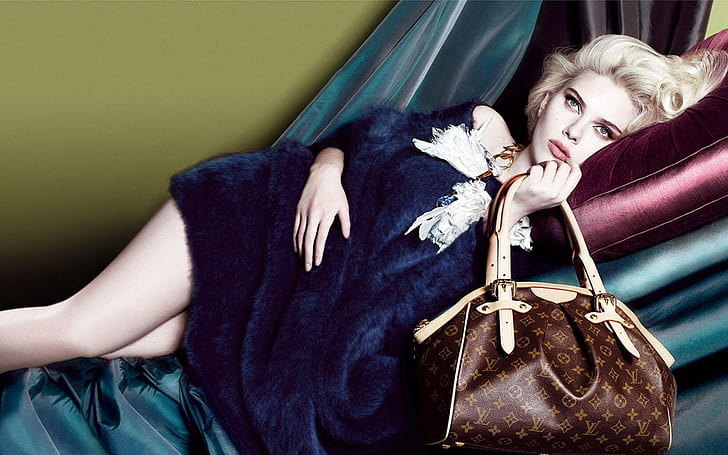
- 20세기: 루이비통, 해외 시장 확장 및 다양한 제품 라인 출시 및 LVMH의 루이비통 인수(1987년)를 통해 명품 산업에서 지배적인 위치를 확보했으며, 앞으로도 세계적인 기업으로 성장해 나갈 것으로 예상됨
루이비통이 LVMH Moët Hennessy에 인수된 것은 1987년입니다. 당시 루이비통은 프랑스의 명품 가죽 제품 회사였고, 모에 샹동과 헤네시는 각각 샴페인과 코냑 생산으로 유명한 프랑스의 명품 주류 회사였습니다.
LVMH는 프랑스 사업가 베르나르 아놀트의 주도로 설립되었습니다. 아놀트는 루이비통, 모에 샹동, 헤네시가 모두 강력한 브랜드 가치를 가지고 있지만, 각자는 경쟁 환경에서 어려움을 겪고 있다고 판단했습니다. 그는 이 세 회사를 합병하여 시너지 효과를 창출하고, 세계적인 명품 기업으로 성장시킬 수 있다고 믿었습니다.
결국 아놀트의 노력으로 루이비통, 모에 샹동, 헤네시가 합병되어 LVMH Moët Hennessy가 탄생했습니다. LVMH는 오늘날 세계 최대 규모의 명품 기업으로 자리매김하며, 루이비통, 디올, 펜디, 지방시, 셀린 등 다양한 명품 브랜드를 보유하고 있습니다.
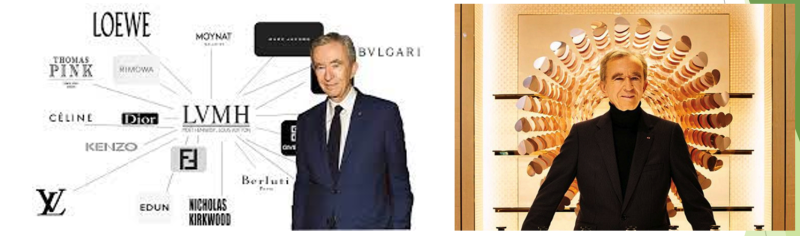
Bernard Arnault 회장님의 깔끔한 슈트 패션은
가히 성공한 CEO들 중의 최고로 옷 잘입기 패션으로도 유명합니다.
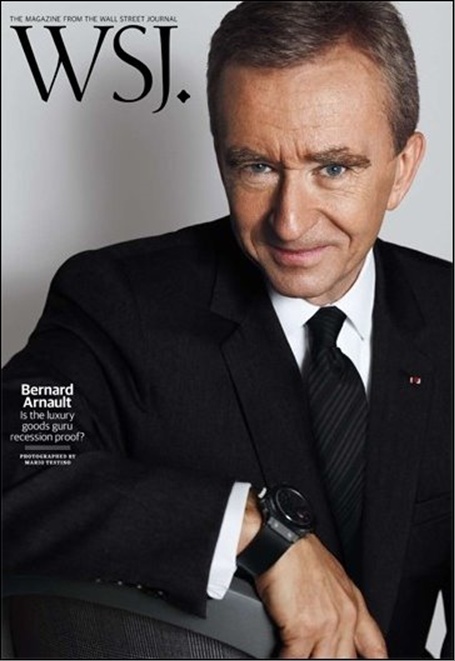
명품회사의 회장님 답게 패션에 진심이시지요.
루이비통 인수 이후 LVMH의 주요 발전 사항은 다음과 같습니다.
- 1990년대: 기존 명품 브랜드 확장 및 새로운 브랜드 인수 (예: Givenchy, Kenzo, Fendi)
- 2000년대: 패션, 화장품, 주얼리 등 다양한 분야로 사업 확장
- 2010년대: 아시아 시장 진출 강화
- 2020년대: 지속가능한 경영 및 디지털 전략에 집중
2024년 6월 2일 기준 LVMH Moët Hennessy의 현재 주가는 750 유로이고, 연간 배당금은 12.50 유로배당 수익률은 1.67%입니다.
특이점은 `23년 배당금이 역사상 최고 수준이며 이러한 배당지급은 확장 될 것이란 전망입니다.
5년간 66.7% 증가
- 2019년: 7.50 유로
- 2020년: 8.00 유로
- 2021년: 8.50 유로
- 2022년: 9.00 유로
- 2023년: 12.50 유로
LVMH는 주주들에게 매년 두 번씩 배당금을 지급합니다. 1월과 5월에 각각 배당금이 지급됩니다.
루이비통이 영원히 사랑받는 브랜드 답게, 주주들에게도 수익을 환원하고 있음을 알 수 있습니다.
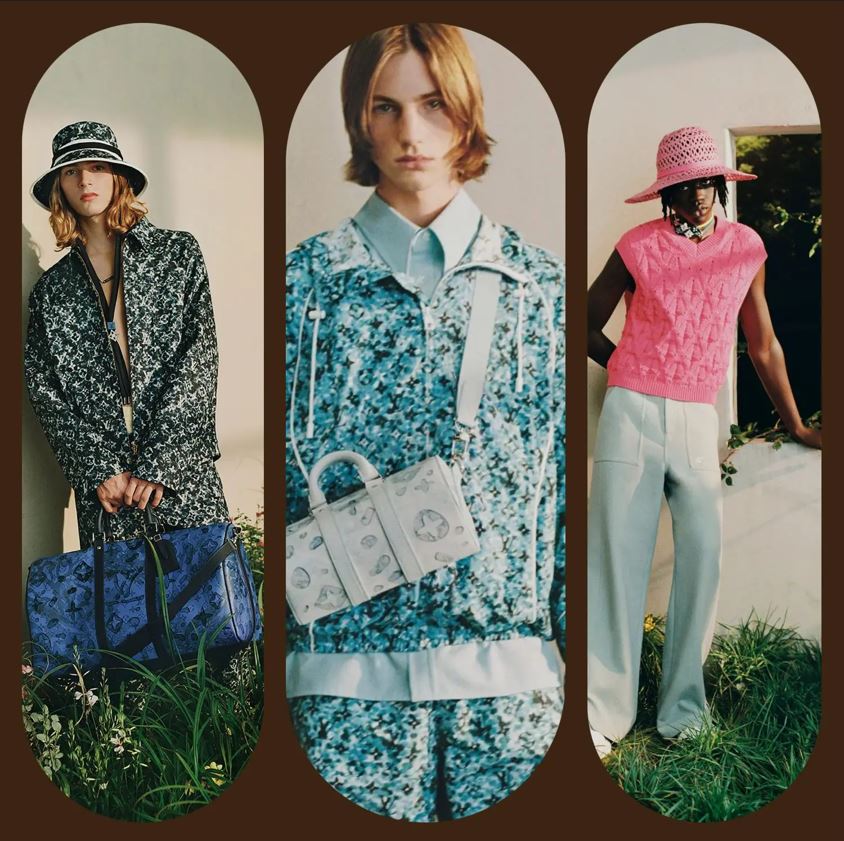
루이비통 브랜드 이름은 루이 비통이라는 창립자의 이름을 기억하며, 그의 뛰어난 기술과 혁신적인 디자인을 상징합니다. 루이비통은 오늘날에도 여전히 최고의 품질과 명성을 유지하며, 앞으로도 오랫동안 사랑받는 브랜드가 될 것입니다.
정말 호랑이는 가죽을 남기고
사람은 이름을 남긴다는 말이 딱 루이비통 같습니다.
SM기업 또한 대표는 물러나고 주주들에게 바톤이 넘겨지듯이
루이비통 또한 LVMH와 함께 주주들과 행보가 계속될 것입니다.
퍼스널브랜드의 공부는 계속 됩니다~!
공감과 댓글은 잊지 않으셨죠? ^^
오늘도 행복한 날 되세요!
감사합니다.

 Moraum
댓글 남기기